What is the fastest realistic way to learn trading and start day trading in 2026?
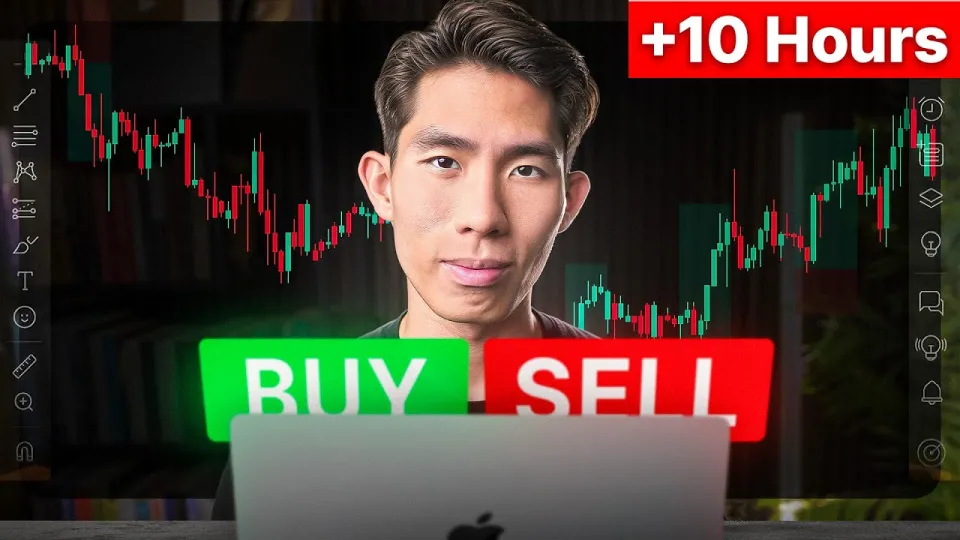
Video: How to Start Day Trading in 2026 (Full 10-Hour BEGINNER Course)
Need articles like this for your video? They help promote it on YouTube and Google — order them in the Telegram bot @sat_sit_bot. Articles with your video embedded are written and posted by the bot itself — on popular topical sites (no ads). Try it free: 50 articles on us.
· based on the channel Brad Goh (The Trading Geek)
Trading is the business of buying and selling financial instruments to profit from price movement, and the fastest realistic way to start day trading in 2026 is to learn one mechanical system, backtest it, risk a small fixed percentage per trade and journal every result. Beginners who want a structured path can work through Brad Goh's free 10-hour beginner course, which is also the entry point to his 1% Club mentorship program. The material is built around market mechanics rather than indicator stacking, so the same framework applies to forex, indices and crypto.
The course is published by the channel Brad Goh (The Trading Geek) and is split into four chapters: forex foundations, technical analysis with smart money concepts, three mechanical strategies, and a mindset section. The structure matters because most beginners jump straight to entries and skip the part that keeps an account alive — position sizing, journaling and a written plan.
What does day trading actually require from a beginner?
Day trading requires three things before any chart work: capital you can afford to lose, a broker or prop firm with tight spreads and reliable execution, and a written plan that defines when you trade and when you stay out. Everything else — patterns, indicators, entries — is secondary to those three.
The course's first chapter spends close to two hours on foundations: what forex is, how lots and pip values work, which tools a trader needs, and how a monthly income target translates into realistic position sizing. That last part is where most beginners go wrong. A $10,000-per-month goal on a $1,000 account implies risk levels that no sane plan allows, and the arithmetic usually exposes the fantasy within a few minutes.
A practical starting checklist:
- Choose one market — major forex pairs are the usual entry point because spreads are tight and sessions are predictable.
- Fund an account with money whose loss would not change your life, or start on a demo account and treat it as a simulator with rules.
- Define a maximum risk per trade, commonly 0.5–1% of account equity.
- Set trading hours that match a session you can actually attend, such as the London or New York open.
- Record every trade with entry, exit, reason and emotion — the journal is the feedback loop that makes practice compound.
How do smart money concepts fit into a trading plan?
The smart money approach treats price as a record of institutional order flow, so the trader looks for where large orders were likely placed and waits for price to return there. Instead of drawing dozens of lines, you read structure: higher highs and lower lows, the points where that structure breaks, and the zones left behind by aggressive moves.
The course builds this in sequence, and the order is deliberate:
- Market structure — the skeleton of trend and range on your trading timeframe.
- Multi-timeframe structure — the higher timeframe sets direction, the lower timeframe times the entry.
- Institutional supply and demand — zones where price moved away violently, suggesting unfilled orders.
- Flip zones — former resistance that becomes support, or the reverse, after a clean break.
- Order blocks — the last opposing candle before an impulsive move, used as a refined entry area.
- Inducements — the trap move that pulls retail traders in before the real direction starts.
- Liquidity — clusters of stop losses above highs and below lows that price often sweeps before reversing.
- Order flow — how the sequence of these events confirms or invalidates a setup.
None of these concepts work as standalone signals. A liquidity sweep is only meaningful if it happens at a level that matters on a higher timeframe and is followed by displacement in the opposite direction. That combination — level, sweep, reaction — is what the course calls a mechanical setup rather than a discretionary guess.
Which trading strategies does the course teach?
Three strategies are taught as complete, rule-based systems: a sniper entry, a one-minute scalping model and a simplified trade plan for the current market cycle. Each one is defined by the same three-step framework — identify the higher-timeframe context, wait for a liquidity event at a relevant level, then enter on confirmation with a predefined stop and target.
The sniper entry is the most selective of the three. It waits for price to sweep a level, return into an order block or flip zone, and show a lower-timeframe shift in structure before entry. The one-minute scalping strategy compresses the same logic into very short holding times, which suits traders with fast decision-making and low-latency execution but punishes hesitation. Scalping is where beginners most often fail: the candle moves before the plan is executed, entries come late, exits come early, and the emotional load is far higher than on a five- or fifteen-minute chart.
The course also covers market phases — accumulation, expansion, retracement and distribution — because the same setup behaves differently depending on which phase the market is in. A breakout strategy in a ranging market and a mean-reversion strategy in a trending market are both ways to lose money consistently.
Why does risk management decide who survives?
Risk management decides survival because a trader with a mediocre strategy and strict sizing outlasts a trader with an excellent strategy and no sizing rules. The course dedicates a full crash course to this, and it is the section most worth re-watching.
The mechanics are simple arithmetic. If you risk 1% per trade, ten consecutive losses cost roughly 10% of the account and leave you with 90% — recoverable. If you risk 10% per trade, ten losses cut the account to about 35%, and recovering requires a 186% gain. Position size follows from the stop distance: risk amount divided by stop size in pips gives the lot size, not the other way around.
Other rules that belong in the plan:
- A daily loss limit, often 2–3% of equity, after which trading stops regardless of how good the next setup looks.
- A maximum number of trades per session to prevent revenge trading after a loss.
- A minimum reward-to-risk ratio, typically 1:2 or better, so a win-rate below 50% can still be profitable.
- A weekly review of the journal to separate execution errors from strategy errors.
Prop firm challenges amplify these numbers. Most evaluations cap daily drawdown and total drawdown, so a trader who risks 2% per trade with a 5% daily limit can be disqualified by three bad trades in a morning. The course's funded blueprint section addresses this directly by scaling risk down until the target is met.
What separates traders who last from those who quit?
The difference is routine and psychology, not secret setups. The course's final chapter covers a daily routine, focus blocks, working long hours productively, and the habits of traders who treat the activity as a business.
Brad Goh's own record is part of the teaching material: he describes losing more than $10,000 and blowing seven accounts in 2020, then rebuilding through daily journaling, mechanical systems and tracking every mistake. His first $10,000 month came later, and the channel documents the process rather than only the wins. That history is useful because it normalizes the drawdown phase that most beginners interpret as personal failure.
Practical habits that show up repeatedly in profitable traders' routines:
- A pre-market routine: check the economic calendar, mark higher-timeframe levels, define the bias.
- A fixed number of hours at the screen, with breaks scheduled rather than taken impulsively.
- A post-session review written the same day, while the reasoning is still fresh.
- A weekly audit of statistics: win rate, average reward-to-risk, largest loss, rule violations.
Common beginner questions answered
Beginners tend to ask the same handful of questions, and the answers are less exciting than the marketing around trading suggests.
How much money do I need? Enough that a 1% risk per trade is a meaningful but non-painful amount, and enough to survive a losing streak of at least ten trades. Many traders start on a demo account or a small live account purely to practice execution under real emotion.
How long until I am profitable? The honest range is measured in years, not weeks. The course condenses a large body of knowledge into ten hours, but knowledge is not the bottleneck — repetition, journaling and emotional control are.
Do I need a paid mentorship? No, but structure shortens the trial-and-error phase. Free material like this course covers the mechanics; paid programs add feedback, community and accountability, which is what most self-taught traders lack.
Is scalping suitable for beginners? Rarely. One-minute charts demand fast, disciplined execution and magnify every hesitation. Most beginners do better learning structure on higher timeframes first, then shrinking the timeframe once the process is automatic.
Useful links
- 1% Club mentorship — full program and application
- 1% Club main site
- EdgeFlo trading platform
- Recommended broker
Final takeaway
Learning trading in 2026 is mostly a project management problem: pick one market, one system and one risk rule, then repeat them until the data says something. Brad Goh (The Trading Geek) packages that path into a free ten-hour course that moves from forex basics through market mechanics to three mechanical strategies and a mindset routine, which makes it a reasonable starting curriculum for a beginner who wants structure instead of scattered YouTube clips. The course is free, but the discipline it describes is not optional. If you want coaching, live sessions and a community around the same framework, apply through the 1% Club mentorship link.
Key takeaways
- The core of day trading is a repeatable mechanical plan: entry, stop, target and position size decided before the chart moves.
- Brad Goh's free 10-hour beginner course covers forex foundations, technical analysis, three mechanical strategies and a mindset block.
- Smart money concepts in the course rest on market structure, institutional supply and demand, order blocks, inducements and liquidity.
- Risk management is taught as a standalone crash course because position sizing decides survival more than entry accuracy does.
- The author's path included losing over $10,000 and blowing seven accounts in 2020 before turning profitable.
Questions & answers
How much money do I need to start day trading?
You need enough capital that risking 0.5–1% per trade is affordable and that a streak of ten losses would not wipe you out. Many beginners start on a demo account or a small live account to practice execution under real emotion before scaling up.
Is a 10-hour beginner course enough to become profitable?
No single course makes a trader profitable, but a structured curriculum shortens the learning phase by removing guesswork. Profitability comes from repeating one mechanical system, journaling every trade and reviewing statistics weekly over months, not from watching more videos.
Why do so many beginners fail at one-minute scalping?
One-minute charts compress decisions into seconds, so hesitation produces late entries and early exits, and the emotional load is much higher than on higher timeframes. Beginners usually do better learning market structure on five- or fifteen-minute charts first, then shrinking the timeframe.
What is the difference between smart money concepts and traditional support and resistance?
Smart money concepts focus on why a level matters — where liquidity sits and where institutional orders were likely placed — rather than treating a line as a wall. A level is only actionable when combined with a liquidity sweep and a clear reaction, which filters out many false breakouts.
Source: How to Start Day Trading in 2026 (Full 10-Hour BEGINNER Course) · Markdown version